Computing skills, beliefs and identities in young people from underserved communities

Despite increasing access to computing curricula within schools, the number of young people from diverse backgrounds choosing computing qualifications and careers is still low. It is important to understand the reasons for this lack of engagement directly from young people in order to identify potential avenues for intervention. Furthermore, it is vital to consider these reasons within their specific educational and social contexts. This qualitative pilot study aimed to provide insight into how young people from underserved communities in the United Kingdom viewed computing and how it related to their current lives and future aspirations. We interviewed thirteen young people, aged 9-22, who were at risk of educational disadvantage. Thematic analyses identified a mismatch between a stereotyped computing identity and the identities or personal interests of the young people. Although they felt comfortable with using computers in general, the young people seemed to lack belief in their own ability, or to understate it, during the interviews. Future research should expand on these themes and take an intersectional approach to promote context-specific interventions and support to encourage a more diverse workforce in computer science.

For the full research article, click here.

A Methodology for Investigating Women’s Module Choices in Computer Science

At ITiCSE 2021, Working Group 3 examined the evidence for teaching practices that broaden participation for women in computing, based on the National Center for Women & Information Technology (NCWIT) Engagement Practices framework. One of the report’s recommendations was “Make connections from computing to your students’ lives and interests (Make it Matter) but don’t assume you know what those interests are; find out! ” The goal of this 2023 working group is to find out what interests women students by bringing together data from our institutions on undergraduate module enrollment, seeing how they differ for women and men, and what drives those choices. We will code published module content based on ACM curriculum guidelines and combine these data to build a hierarchical statistical model of factors affecting student choice. This model should be able to tell us how interesting or valuable different topics are to women, and to what extent topic affects choice of module – as opposed to other factors such as the instructor, the timetable, or the mode of assessment. Equipped with this knowledge we can advise departments how to focus curriculum development on areas that are of value to women, and hence work towards making the discipline more inclusive.

For the full research abstract, click here

Go unplugged for better computational thinking

Computational thinking doesn’t have to be taught in a classroom

Unplugged activities are a great option for students who do not have access to computers at home, and new research shows the benefits of such activities for computational thinking. Many of these can be done with only a pen and piece of paper, an instruction sheet, and a partner—such as a parent or guardian, sibling, or remote classmate. Read the full blog post here. For the original research article, click here.

Virtual teaching assistants help students learn

Students access content with varying interactivity

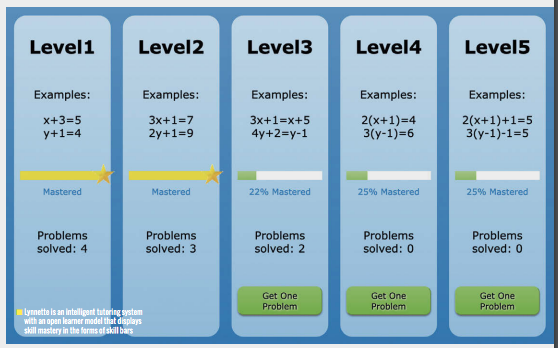
Learning in classrooms is usually guided by a teacher, but new research has shown the promise of using virtual assistants. A study has tested the effects of an open learner model, in which students can view and reflect upon their level of mastery in different aspects of problem-solving. Students can then choose which problems to work on in order to progress. Yanjin Long and Vincent Aleven, who conducted the research in two US classrooms, found that students who had control over their learning in this way showed significantly better equation-solving skills and enjoyment levels than their counterparts. Read the full blog post in Hello World issue 12 here. For the original research article, click here.

Team diversity as a predictor of innovation

Team diversity is one of the core advantages of learning in groups, and new research has shown its benefits for project innovation. The study, conducted at the Israel Institute of Technology, found that inclusion of people from various academic disciplines and levels in classroom settings helps students create innovative and implementable solutions. Individual differences, researchers find, invite students to approach situations in various ways, and stimulate new ideas and perspectives.

You can read the full blog post in Hello World issue 11 here. For the original research article, see.

Using non-programming activities to teach programming concepts

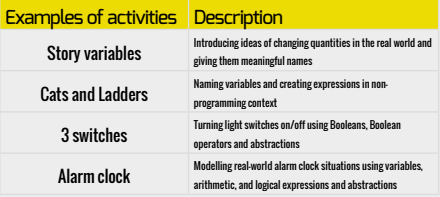
Programming takes place on a computer, but research has shown the promise of using non-programming activities for teaching important concepts to novice learners. The study, conducted by Grover et al at three urban US schools, was designed with 16 non-programming activities during a 20-day programme. The research team found that the learning gains from students who followed the intervention were significantly higher, in comparison to students who followed the regular computer science curriculum.

You can read the full blog post in Hello World issue 10 here. For the original research article, see.